How Digital Platforms Are Reshaping the Entertainment World
25 October 2026
The lights no longer wait for a single cue. They flicker on in a thousand pockets at once, in bedrooms and buses and basements, wherever a screen glows and a story begins. Entertainment used to arrive on schedule, delivered by gatekeepers who decided what the world would watch, hear, and read. Today the audience holds the dial. Digital platforms have not simply added new channels to an old system; they have rewritten the physics of the entire industry, changing how stories are made, how they travel, how they earn, and who gets to tell them.
This article examines that shift with a practitioner's eye. It moves past the surface chatter about streaming wars and viral hits to the structural forces underneath: the economics of attention, the collapse of distribution scarcity, the rise of creator-owned audiences, and the uncomfortable trade-offs that come with all of it. Whether you run a production company, manage an artist, invest in media, or simply want to understand the machinery behind what you watch, the goal here is to leave you with a clearer map of the terrain.
The End of Scarcity and the Birth of Abundance
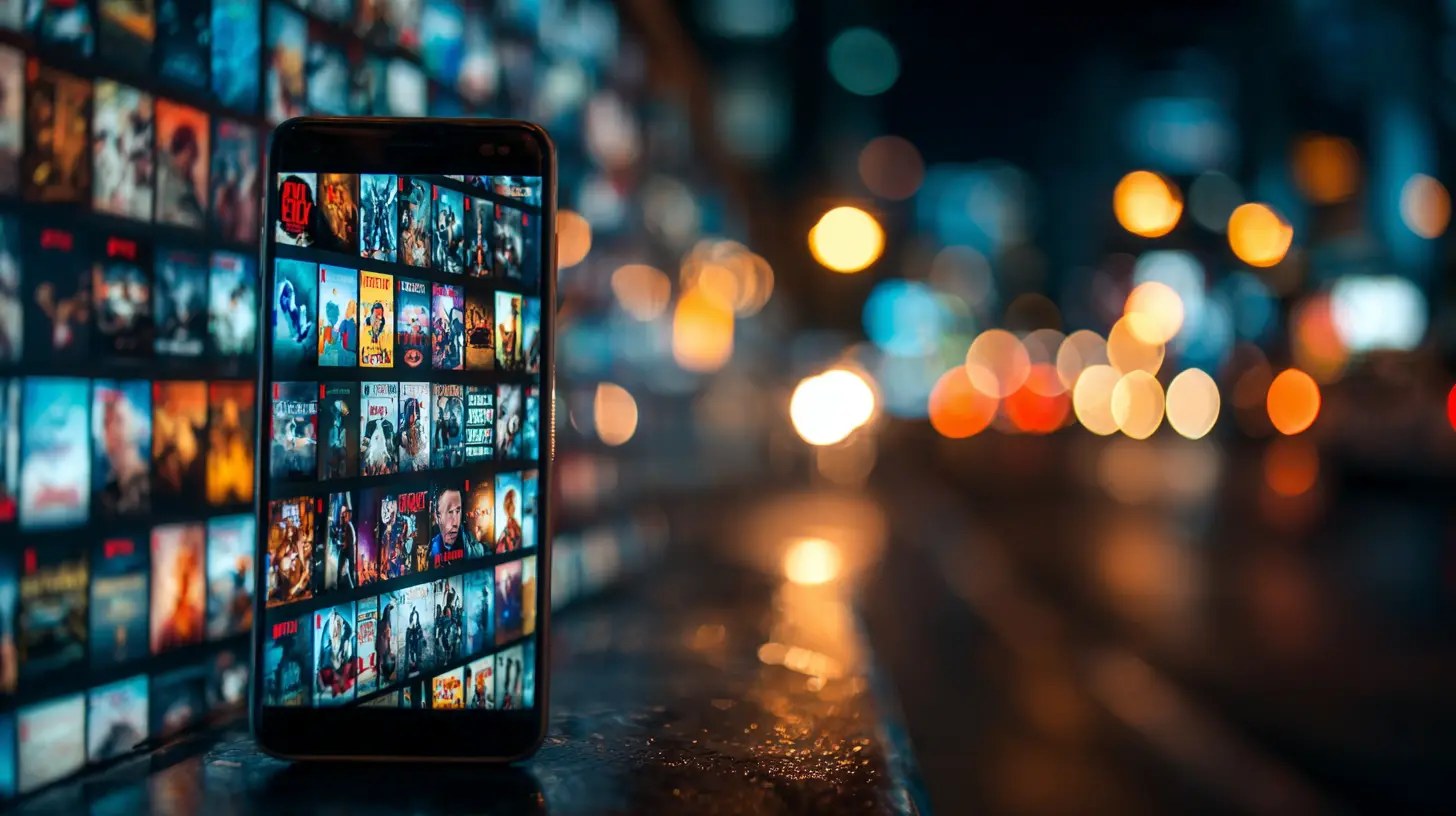
For most of the twentieth century, entertainment economics rested on a simple constraint: scarcity. There were only so many cinema screens, radio frequencies, television channels, and shelf slots in a record store. That scarcity gave gatekeepers enormous power. A record label's real product was not music but access to distribution. A broadcaster's real asset was not content but the prime-time slot that made content visible.Digital platforms demolished that constraint. When distribution costs fall toward zero, the bottleneck moves. It is no longer the shelf or the frequency; it is attention. This is the single most important idea for understanding the modern entertainment business. Abundance does not make success easier. It makes discovery harder and differentiation more valuable.
Consider the practical consequence. In a scarce world, an artist's job was to be good enough to be chosen. In an abundant world, being good is table stakes. The harder work is building a direct relationship with an audience that can find you again without a gatekeeper's help. This is why so many successful creators now think like media companies rather than like performers waiting for a break.
The shift also changes what gets funded. When a platform can measure engagement in near real time, it can justify investment in niches that would never have survived a mass-market schedule. A documentary about competitive cheese rolling may never fill a cinema, but it can thrive on a platform with global reach and precise targeting. The long tail is real, but so is its cruelty: most of it earns very little, and the distribution of rewards is more concentrated than the romantic narrative suggests.
How Algorithms Became the New Programmers
The algorithm is the quiet auteur of the digital era. It decides what appears in a feed, which video autoplays next, and which song enters a playlist that millions hear without ever choosing it. This is a profound shift in cultural power. The person who curates at scale now shapes taste as surely as any studio executive ever did, but with a different logic: optimization for engagement rather than for prestige or schedule.Why does this matter to anyone making or selling entertainment? Because algorithmic distribution rewards behaviors that differ from traditional promotion. It favors content that holds attention in the first few seconds, that triggers a strong reaction, and that keeps people watching or listening rather than clicking away. That does not mean quality is irrelevant. It means quality must be legible to the system quickly.
There is a real trade-off here, and it deserves honest treatment. Optimizing purely for algorithmic reach can push creators toward formula: the same hooks, the same pacing, the same emotional beats engineered for completion rates. The result can be a kind of flattening, where distinctive voices get sanded down to fit a pattern. The counterargument is equally real: algorithms have surfaced artists and stories that gatekeepers would have ignored, and many creators use algorithmic insight to sharpen their craft rather than to abandon it.
The practical lesson is to treat algorithms as a distribution tool, not a creative director. Use the data to understand how your audience finds you and what keeps them engaged. Do not let it dictate what you make. The creators who endure tend to be those who use the machine without being remade by it.
From Ownership to Access: The Subscription Reckoning
The move from owning media to renting access has reshaped revenue across the industry. Subscription models gave platforms predictable income and gave audiences enormous choice. They also created a structural problem that is now coming due: the economics of paying for content out of a fixed monthly fee are unforgiving when every platform is trying to fund premium production at once.Here is the core tension. A subscription business earns the same whether a subscriber watches one show or a hundred. That is wonderful for engagement and terrible for cost control when the competition for attention drives spending upward. Platforms respond in predictable ways: raising prices, introducing ad-supported tiers, bundling services, and tightening production budgets. Each move has consequences for creators and for audiences.
For anyone negotiating in this environment, a few principles hold. First, understand which model your partner is actually running. An ad-supported platform cares about watch time and advertiser-safe content; a premium subscription platform cares about acquisition and retention drivers, which often means a smaller number of high-impact titles. Second, recognize that exclusivity is a bargaining chip with a real price. Locking a project to one platform can secure funding, but it can also strand the work where the audience cannot follow. Third, model the long tail honestly. A title that performs modestly on one service may find a second life elsewhere, and windowing strategies exist precisely to capture that value.
| Model | Primary Revenue Logic | What It Rewards | Main Risk |
|---|---|---|---|
| Subscription (SVOD) | Retention and acquisition | Flagship titles, bingeable series | Rising content costs, churn |
| Ad-supported (AVOD) | Watch time and ad inventory | Volume, broad appeal, safe content | Revenue per viewer can be thin |
| Transactional (TVOD) | Direct purchase or rental | Event titles, loyal fanbases | Fragile discovery |
| Creator platforms | Direct fan payment and tips | Authenticity, community, frequency | Income volatility |
The table is a simplification, but it captures the strategic question every creator faces: which revenue logic matches the work and the audience? Choosing a model that fights your content is a common and expensive mistake.
The Creator as a Business
One of the most consequential changes is the rise of the creator as an independent economic unit. A musician, filmmaker, or commentator can now build an audience, sell directly to it, and keep a far larger share of revenue than traditional deals allowed. This is genuinely liberating. It is also genuinely demanding.The freedom comes with a job description that no one hands you. You are now responsible for audience development, marketing, community management, and financial planning, in addition to the craft itself. Many creators underestimate this. They treat the platform as a stage when it is actually a storefront, a mailing list, and a distribution network rolled into one.
A useful way to think about it is the difference between reach and relationship. Reach is rented; relationship is owned. A viral moment on a platform you do not control can vanish overnight with a policy change or an algorithm tweak. An email list, a fan community, or a direct subscription base is an asset you carry with you. The creators who build durable careers tend to invest in owned channels even while they use rented ones for discovery.
There is a misconception worth correcting: that going independent is automatically more profitable. It can be, but only at sufficient scale and with disciplined operations. Below a certain audience size, the administrative burden and income volatility can outweigh the upside. Many successful creators use a hybrid approach, pairing platform deals with direct-to-fan revenue, and that balance is often wiser than an all-or-nothing stance.
Data, Personalization, and the Double-Edged Gift
Personalization is one of the clearest benefits digital platforms offer. Recommendations help audiences find work they would never have encountered, and they help creators reach people who are genuinely likely to care. For a niche artist, this is transformative. A folk musician in a small city can now find listeners in dozens of countries without a tour or a label.But personalization carries costs that are easy to overlook. When recommendation systems narrow what people see based on past behavior, they can create feedback loops that make audiences less adventurous and creators more dependent on fitting an established profile. The system is excellent at giving people more of what they already like and less reliable at surprising them.
For industry professionals, this suggests a practical strategy: use personalization as a bridge, not a cage. Design campaigns that introduce your work to adjacent audiences rather than only to the already converted. Test whether your content can travel beyond its core niche. And be honest about the limits of the data. Metrics tell you what happened; they rarely tell you why, and they almost never tell you what would have worked if you had tried something different.
The New Geography of Entertainment
Digital platforms have also redrawn the map of cultural influence. A production made in Lagos, Seoul, or Mumbai can reach a global audience without passing through the traditional international distribution pipeline. This has diversified what global audiences watch and listen to, and it has created genuine economic opportunities in regions that were once treated as export markets for someone else's content.The nuance matters here. Global reach does not automatically mean global success, and the platforms that enable it are still governed by their own commercial priorities. Local-language content often performs best when it is authentically local rather than engineered for a vague international audience. The lesson for producers is counterintuitive: the more specific and rooted a story is, the more widely it can travel, because specificity creates the texture that generic content lacks.
There is also a labor dimension. Global platforms have created new demand for local production talent, but they have also concentrated bargaining power in a small number of buyers. Creators in smaller markets can find themselves negotiating with a platform that knows far more about their audience than they do. Building local audience data and direct relationships is a form of leverage, and it is worth the investment.
Common Mistakes and How to Avoid Them
Experience across the industry reveals a handful of recurring errors. Naming them plainly is more useful than abstract advice.The first is treating a platform as a strategy. A platform is a channel. The strategy is the audience, the story, and the business model. Teams that chase every new platform without a coherent plan spread themselves thin and build nothing durable.
The second is confusing virality with viability. A spike in views feels like success, but if it does not convert into subscribers, ticket sales, or lasting fandom, it is a rented moment. Build a path from attention to relationship, and measure conversion rather than applause.
The third is ignoring the terms of the deal. Revenue splits, rights ownership, exclusivity windows, and termination clauses matter enormously over time. Creators often focus on the headline number and neglect the clauses that determine what happens in year three. Read the contract with the same care you give the creative work.
The fourth is underinvesting in owned infrastructure. An email list, a website, and a payment system may seem unglamorous next to a viral video, but they are what keep a business alive when the algorithm changes.
The fifth is misreading the data. High engagement does not always mean high value. A small, devoted audience can be worth more than a large, indifferent one, especially when the revenue model depends on direct support rather than advertising.
Best Practices for Professionals
What separates teams that thrive on digital platforms from those that struggle? A few habits recur.- Define the audience before choosing the channel. Know who you are serving and why they would care, then select platforms that reach them.
- Build owned assets alongside rented reach. Treat every platform as a funnel toward a relationship you control.
- Study the revenue logic of each partner. Align your content and expectations with how the platform actually earns money.
- Protect your rights. Negotiate terms that preserve future options, especially around exclusivity and ownership.
- Invest in consistent, recognizable craft. Algorithms change; a distinctive voice travels.
- Measure what matters. Track conversion, retention, and lifetime value, not just impressions.
- Plan for volatility. Diversify revenue streams so that a single policy change cannot end your business.
These are not secrets. They are disciplines, and discipline is what separates a lucky moment from a lasting career.
What Comes Next
The reshaping is not finished. New formats, new business models, and new platforms will continue to appear, and some will fade faster than the hype suggests. The wise response is not to chase every wave but to understand the underlying forces: abundance of content, scarcity of attention, the shift from ownership to access, the rise of the creator as a business, and the growing power of recommendation systems.Those forces are stable even when the platforms are not. A professional who understands them can adapt to whatever comes next, because the questions remain the same. Who is the audience? What do they value? How do we reach them reliably? How do we earn from the relationship without exploiting it? And how do we keep making work that is worth their time?
The lights will keep flickering on in a thousand pockets. The work of entertainment is still, at its heart, the work of earning attention and returning something worth having. Digital platforms have changed the machinery around that exchange, but not its soul. Understand the machinery, protect the soul, and the rest is craft.
all images in this post were generated using AI tools
Category:
Industry AnalysisAuthor:

Matthew Scott

