The Psychology Behind Consumer Perceptions
2 August 2026
Every purchase starts in the mind, not in the wallet. Before a shopper ever touches a product, reads a review, or compares prices, their brain has already made dozens of judgments based on cues they might not even consciously notice. The color of a button, the font on a label, the way a price is displayed, the order of options on a menu, the texture of a package. These elements shape perception long before logic gets a chance to weigh in.
Understanding consumer perception is not about manipulation in the dark arts sense. It is about recognizing that humans are not rational decision-makers, despite what classical economics once suggested. We are pattern-matching, emotion-driven, cognitive-miser creatures who take shortcuts whenever possible. Businesses that understand these shortcuts can align their offerings with how people actually think, rather than how they wish people would think.
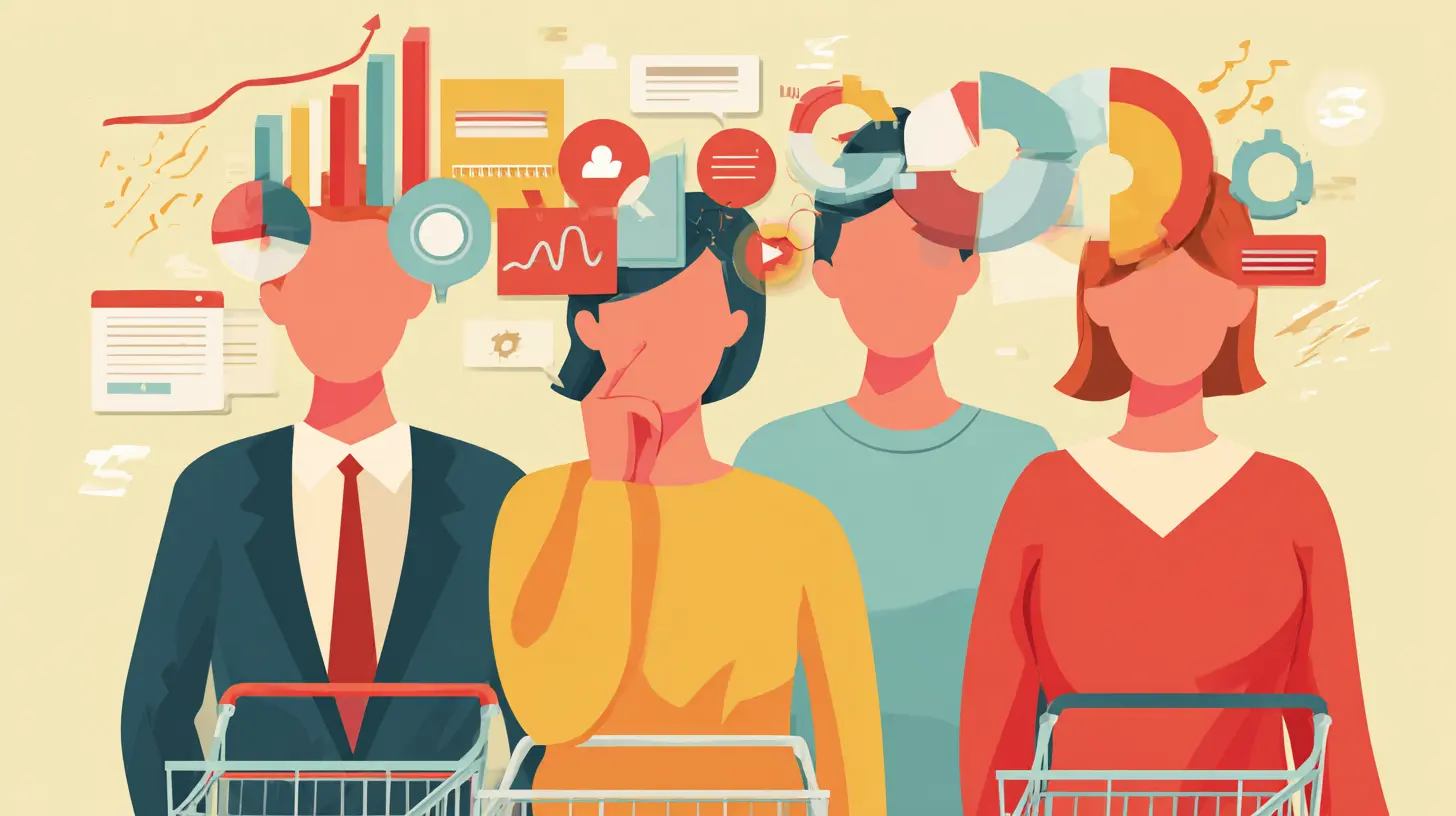
Perception Is Not Reality, It Is a Construct
The phrase "perception is reality" gets thrown around a lot in business circles, but it is slightly misleading. Perception is not a direct reflection of objective reality. It is a constructed interpretation, built from sensory input, past experience, social context, and internal biases. Two people can look at the same product and walk away with completely different impressions of its quality, value, and desirability.Take a simple example. A jar of honey with a rustic, handwritten label and a slightly imperfect shape suggests artisanal care and natural origins. The exact same honey in a sleek, modern jar with a minimalist sans-serif label suggests precision and premium processing. Neither label is objectively correct, but each triggers a different perceptual frame. The consumer does not taste the honey first. They taste the story the packaging tells.
This is why brand consistency matters so much. Perception is built through repeated exposure to coherent signals. If a luxury brand suddenly uses cheap packaging, the perceived value drops even if the product inside is identical. The brain notices the mismatch and recalibrates. The product is no longer "premium" because the context says otherwise.

The Role of Expectations in Shaping Experience
Expectations are not just mental placeholders. They actively alter physiological and psychological responses. This is one of the most powerful and underappreciated findings in consumer psychology. When people expect something to be good, they rate it as better. When they expect something to be expensive, they often perceive it as higher quality, even if the actual attributes are identical.Consider wine tasting. In blind tests, people consistently rate cheaper wines as comparable to or better than expensive ones. But when the same wine is presented with a higher price tag, the brain's reward centers light up more intensely. The price itself becomes part of the flavor. This is not a conscious choice. It is a neural response to the expectation that higher cost signals higher quality.
Businesses can use this knowledge in two ways. First, they can set prices that signal the right quality tier for their market position. A price that is too low can actually hurt sales if it signals inferiority. Second, they can manage expectations deliberately. If a product is positioned as premium, every touchpoint, from the website to the unboxing experience, must reinforce that expectation. A single weak link breaks the perceptual chain.
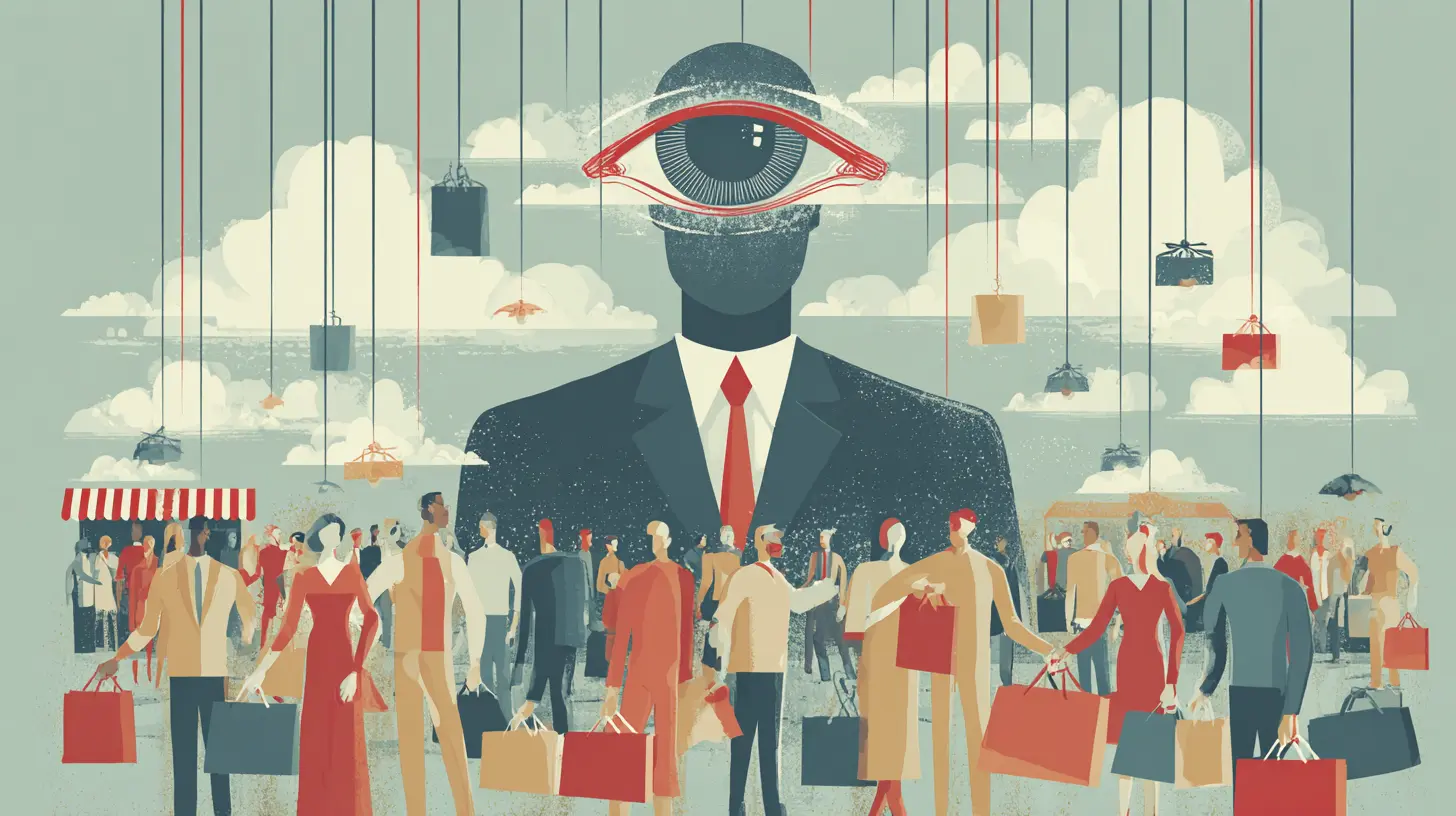
Anchoring: The First Number Sets the Stage
Anchoring is one of the most robust effects in behavioral economics. The first piece of information a person receives about a value serves as a mental reference point, and all subsequent judgments are adjusted from that anchor. This works even when the anchor is arbitrary or obviously irrelevant.In retail, this is why "compare at" prices work. When a jacket is marked at 120 dollars with a strikethrough original price of 200 dollars, the 200 becomes the anchor. The 120 now feels like a deal, even if the jacket was never actually sold at 200. The brain does not calculate intrinsic value. It calculates relative value against the anchor.
But anchoring is not just about discounts. It applies to product lineups, menu design, and subscription tiers. When a software company offers a basic plan at 10 dollars, a pro plan at 30 dollars, and an enterprise plan at 100 dollars, the pro plan suddenly looks reasonable. The enterprise plan is not necessarily there to be purchased. It is there to make the pro plan look like the smart middle choice. This is called the decoy effect, and it works because the brain needs a comparison point to make a decision.
The practical takeaway is to be deliberate about what you present first. If you want people to choose a mid-tier option, do not lead with the cheapest. Lead with the most expensive or show all three together. The order of presentation changes the perception of value.

Loss Aversion and the Fear of Missing Out
Loss aversion is the principle that losses hurt roughly twice as much as equivalent gains feel good. Losing 100 dollars feels worse than finding 100 dollars feels good. This asymmetry drives a huge amount of consumer behavior, often in ways that seem irrational.Limited-time offers, countdown timers, and "only 3 left in stock" messages all tap into loss aversion. The consumer is not thinking about what they will gain from the purchase. They are thinking about what they will lose if they do not act. The fear of missing out is a real psychological state, and it short-circuits careful deliberation.
However, this tactic has a dark side. Overusing artificial scarcity trains consumers to distrust the brand. If every product is always "almost gone," the signal loses meaning. Worse, consumers who feel manipulated may develop negative associations with the brand, leading to long-term damage that outweighs short-term conversion gains.
The better approach is to use loss aversion honestly. If a product genuinely has limited stock, say so. If a sale truly ends on a specific date, hold to that date. The perception of fairness matters. Consumers can tolerate urgency when it feels real, but they punish deception when they catch it.
Social Proof and the Herd Instinct
Humans are social animals. We look to others to determine what is good, safe, and acceptable. This is not just peer pressure. It is a cognitive shortcut that saves mental energy. If thousands of people bought a product and rated it highly, the brain assumes it is probably a safe bet.Social proof comes in many forms. Customer reviews, star ratings, user counts, celebrity endorsements, and even subtle cues like "bestseller" badges all signal that others have already made the leap. The key is specificity. A review that says "great product" is far less persuasive than one that says "I used this for three months and my back pain is gone." Specificity creates a mental simulation, allowing the consumer to imagine their own positive outcome.
But social proof has a failure mode. When reviews are obviously fake or when a product has suspiciously perfect ratings, trust collapses. The brain is wired to detect inconsistency. A product with 4.8 stars and 10,000 reviews is believable. A product with 5.0 stars and 12 reviews is suspicious. The perception of authenticity matters more than the raw numbers.
The practical advice is to encourage genuine, detailed reviews rather than trying to game the system. Respond to negative reviews with constructive solutions. This shows that the brand is listening, which is itself a form of social proof. A brand that engages with criticism appears more trustworthy than one that only shows glowing testimonials.
The Halo Effect and First Impressions
The halo effect is the tendency to let one positive attribute influence judgments of other unrelated attributes. If a product looks beautiful, people assume it works better. If a brand has a friendly spokesperson, people assume the company is ethical. If a website loads quickly and looks modern, people assume the products are high quality.This effect is particularly strong in visual domains. A well-designed logo, a clean layout, and high-quality photography create a halo that extends to every other aspect of the brand. This is why companies invest heavily in design even for products that are functionally identical to cheaper competitors. The visual impression is not decoration. It is a cognitive shortcut that tells the brain "this is professional, this is worth my money."
The halo effect also explains why brand extensions can succeed or fail. When Apple moved from computers to phones, the halo of innovation and design carried over. When a budget airline tries to launch a luxury hotel brand, the halo of low-cost service undermines the new venture. The brain resists the mismatch.
For businesses, the lesson is to identify your strongest positive attribute and make sure it is visible in every interaction. If your strength is customer service, make that the first thing people see. If your strength is durability, show it in action. The first impression sets the frame, and everything else is interpreted through that frame.
The Paradox of Choice and Decision Fatigue
More options do not always lead to better decisions. In fact, an overabundance of choices often leads to paralysis, anxiety, and dissatisfaction. This is known as the paradox of choice. When faced with too many options, consumers fear making the wrong choice, so they either delay the decision or settle for a safe default.This is why curated selections often outperform massive catalogs. A specialty coffee shop with ten blends feels more manageable than a supermarket aisle with fifty. The perception of quality is higher when the selection is limited, because the brain assumes that curation implies expertise.
But the opposite can also be true. Some consumers enjoy browsing a wide variety. The key is to match the choice architecture to the consumer's mindset. When people are in a "choosing" mindset, they want options. When they are in a "deciding" mindset, they want guidance. The best approach is to offer a manageable number of options and then provide clear recommendations. A "most popular" tag or a "staff pick" reduces the cognitive load while still giving the illusion of choice.
Decision fatigue is another factor. After making many decisions, people become mentally depleted and are more likely to make impulsive or irrational choices. This is why grocery stores put candy and magazines at the checkout. By the time shoppers reach the register, their decision-making resources are low, and impulse buys are more likely. Online retailers use the same principle with one-click checkout and pre-filled forms.
The Power of Free and the Zero Price Effect
The word "free" has a unique psychological pull. It is not just a lower price. It is a different category entirely. When something is free, the perceived risk drops to zero. There is no downside, or so the brain thinks. This is why free shipping is often more persuasive than a discount of the same value. A 5 dollar discount is nice, but free shipping eliminates a perceived penalty.The zero price effect can be used strategically, but it can also backfire. If a product is constantly free or deeply discounted, the perceived baseline value drops. Consumers start to think the product is not worth paying for. This is a common problem for subscription services that offer long free trials. The trial can be effective, but if it is too long or too easy to access, the perceived value of the paid version diminishes.
A better approach is to use free as a gateway to a higher-value paid tier. Offer a free version that is genuinely useful but has clear limitations. The consumer experiences the value firsthand and then perceives the paid upgrade as a logical next step, not a bait-and-switch. The key is to make the free version feel generous, not stingy. A free version that feels like a trap creates resentment, not conversion.
The Framing Effect and How You Say It Matters
The same information can lead to different decisions depending on how it is framed. A product described as "95 percent fat-free" is perceived differently than one described as "5 percent fat." Both statements are factually identical, but the positive frame feels healthier. This is the framing effect, and it operates in every aspect of marketing.Framing is not about lying. It is about choosing which aspect of the truth to highlight. A price can be framed as "pay 20 dollars per month" or "save 240 dollars per year." The annual frame emphasizes the gain, while the monthly frame emphasizes the cost. Depending on the consumer's mindset, either frame can be more persuasive.
Loss framing is particularly powerful. "You will lose access to your files if you do not upgrade" is more motivating than "You will gain more storage if you upgrade." The fear of loss is stronger than the promise of gain. But this must be used carefully. Overly aggressive loss framing can feel threatening and push consumers away. The best framing is honest and highlights the most relevant benefit for the specific audience.
The IKEA Effect and the Value of Effort
People value things more when they have put effort into creating or assembling them. This is called the IKEA effect, named after the furniture company that sells flat-pack products. The effort of assembly creates a sense of ownership and pride, even if the final product is objectively worse than a pre-assembled alternative.This effect can be applied in many ways. Customization tools that let consumers design their own product increase perceived value. User-generated content, such as reviews or photos, creates a sense of participation. Even something as simple as asking a customer to choose a color or engrave a name can increase their attachment to the product.
But the IKEA effect has limits. If the effort is too high or the process is frustrating, the positive effect turns negative. The key is to provide meaningful but manageable effort. The consumer should feel a sense of accomplishment, not burden. A well-designed customization interface that is easy to use and provides immediate visual feedback can create a strong sense of ownership without overwhelming the user.
The Endowment Effect and Ownership
The endowment effect is the tendency to value something more once we own it, even if we have only owned it for a few seconds. This is why "try before you buy" programs work. Once the product is in the consumer's hands, it becomes theirs psychologically. Returning it feels like a loss, and loss aversion kicks in.This effect is also why free trials are so effective for software and subscription services. After using the product for a week, the consumer has mentally integrated it into their routine. Canceling feels like losing a part of their workflow. The perceived cost of losing the product is higher than the actual subscription price.
The practical application is to get the product into the consumer's hands as early as possible. Samples, demos, trials, and money-back guarantees all trigger the endowment effect. The longer the consumer has the product, the stronger the attachment. The key is to make the return process easy enough to reduce risk, but not so easy that the product feels disposable.
The Scarcity Principle and Perceived Value
Scarcity signals value. When something is rare, it is perceived as more desirable. This is rooted in both evolutionary psychology and basic economics. Limited editions, exclusive releases, and "only available for a short time" all increase perceived value.But scarcity must be credible. If a product is always scarce, it becomes annoying. If a "limited edition" is repeatedly restocked, the signal is destroyed. The best use of scarcity is for genuine constraints, such as a small-batch production or a seasonal ingredient. These constraints are real, and consumers can sense the authenticity.
Scarcity also works better when combined with social proof. "Only 3 left and 50 people are viewing this item" is more persuasive than "Only 3 left." The combination of scarcity and demand creates a sense of urgency that is hard to ignore. But again, this must be honest. Fabricated urgency is a fast track to consumer distrust.
The Impact of Sensory Cues and Packaging
The senses are the gateway to perception. Visual, tactile, auditory, and even olfactory cues shape how a product is judged. A heavier package feels more substantial and higher quality. A smooth, matte finish feels more premium than a glossy, cheap-feeling surface. The sound of a car door closing can influence the perception of safety and build quality.Packaging is not just a container. It is a communication tool. The color palette, typography, and materials all send signals. Green suggests natural and eco-friendly. Black suggests luxury and sophistication. Bright colors suggest energy and fun. These associations are not universal, but they are consistent enough within cultural contexts to matter.
The best packaging design is one that aligns with the product's actual positioning. If the product is premium, the packaging must feel premium. If the product is eco-friendly, the packaging must be recyclable and minimal. A mismatch between packaging and product creates cognitive dissonance, which leads to distrust and lower perceived value.
The Role of Trust and Transparency
Trust is the foundation of all consumer perception. Without trust, every other psychological principle loses its power. A consumer who does not trust a brand will not believe its claims, will not value its social proof, and will not be swayed by its framing.Transparency is the most effective way to build trust. This means being honest about ingredients, sourcing, pricing, and limitations. It means admitting mistakes and correcting them. It means not hiding negative reviews or deleting critical comments. Transparency is risky in the short term, but it pays off in long-term loyalty.
Consumers are increasingly savvy about marketing tactics. They know when they are being manipulated. The brands that succeed are the ones that treat consumers as intelligent partners, not as targets to be influenced. The psychology of consumer perception is not about tricking people. It is about understanding how people think and then creating experiences that genuinely align with their needs and values.
Practical Takeaways for Businesses
The most useful insight from consumer psychology is that perception is manageable. It is not fixed. It is built through deliberate choices about design, pricing, messaging, and customer experience. Every touchpoint is an opportunity to shape perception, but also a risk of undermining it.Start by auditing your current customer journey. Where are the moments of friction? Where are the signals that contradict your desired positioning? What does your packaging say about your product? What does your website say about your brand? What do your reviews say about your customer service? Each of these is a perception cue.
Then, make deliberate changes. If you want to be seen as premium, raise your prices and improve your packaging. If you want to be seen as accessible, simplify your messaging and reduce friction. If you want to be seen as trustworthy, show your process and engage with criticism.
Finally, test everything. Consumer perception is not static. It changes with trends, with cultural shifts, and with individual experiences. What works today may not work tomorrow. The brands that stay relevant are the ones that continuously listen, observe, and adapt.
Understanding the psychology behind consumer perceptions is not a one-time exercise. It is an ongoing practice of curiosity. Ask why customers behave the way they do. Ask what signals they are responding to. Ask what assumptions they are making about your brand. The answers will surprise you, and they will guide you toward more effective, more honest, and more successful business decisions.
all images in this post were generated using AI tools
Category:
Market PositioningAuthor:

Matthew Scott
Discussion
rate this article
1 comments
Ava Franco
Understanding consumer perceptions is crucial for effective marketing strategies and building lasting connections.
August 5, 2026 at 8:32 PM