The Rise of Digital Banking and Finance by 2026
20 April 2026
Remember your first piggy bank? That satisfying clink of a coin, the heft of it in your hands, the sheer agony of having to smash the thing to get your loot? Fast forward a few decades, and the concept feels almost quaint. Because by 2026, your entire financial life won’t be stored in ceramic on a shelf; it’ll be zipping through the air, managed by algorithms, and possibly even advised by an AI that has a better understanding of your spending habits than your own mother.
Welcome to the not-so-distant future of digital banking and finance. It’s not just coming; it’s already unpacking its bags and asking for your Wi-Fi password. So, grab your metaphorical hoverboard (they promised us those by now, too) and let’s dive into what your money will be up to in the next couple of years.

From Brick-and-Mortar to Click-and-Order: The Great Banking Migration
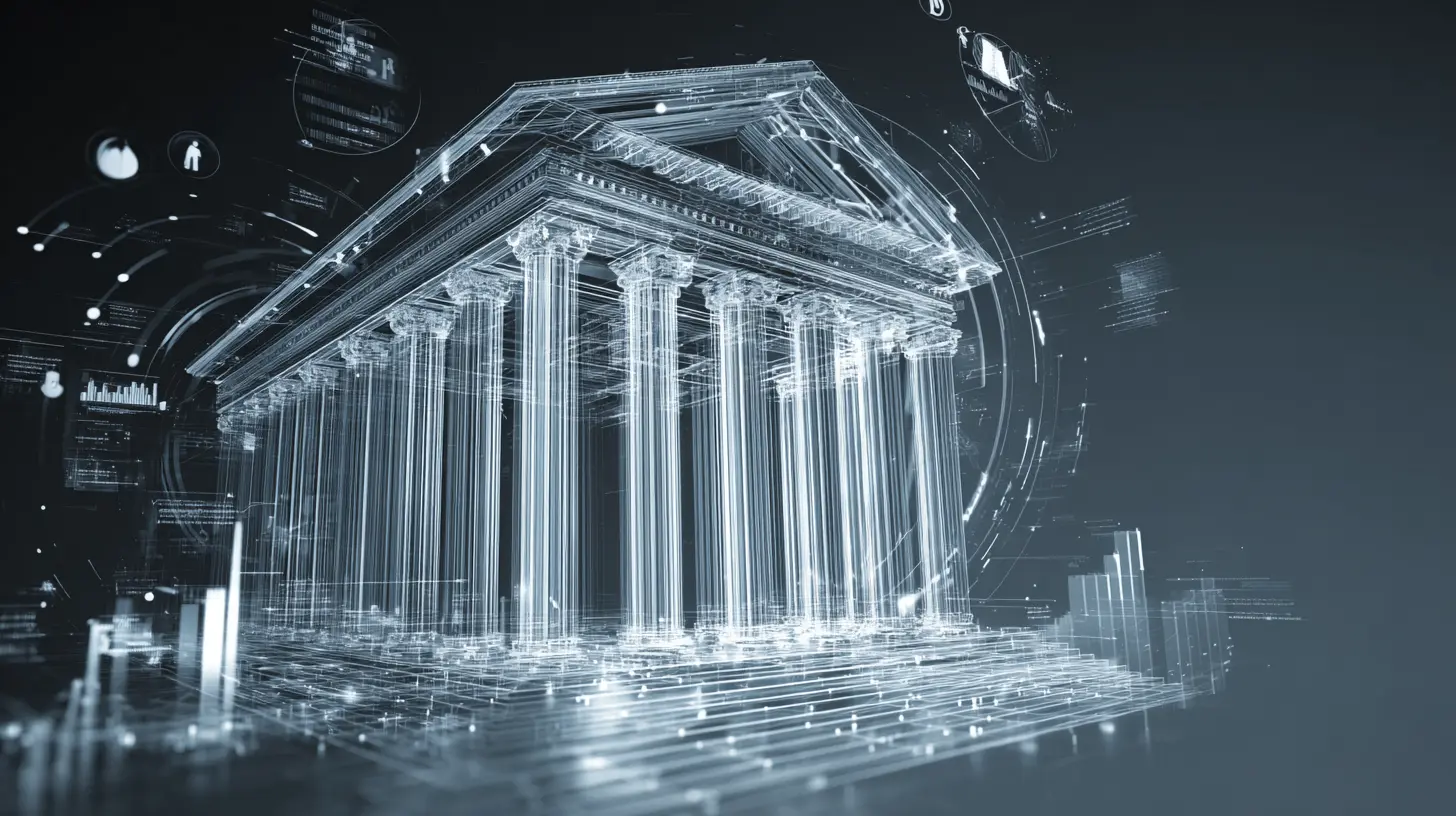
Let’s rewind for a second. Banking used to be a place. You went to a building with imposing columns, waited in a line, and spoke to a person through a little glass window. It was an event, often accompanied by a lollipop if you were lucky. Today, the most important branch of your bank is the smartphone in your pocket. By 2026, the idea of “going to the bank” will sound as archaic as “let’s rent a VHS.”This migration isn’t just about convenience; it’s a full-blown revolution. Think of it like this: we moved from sending letters (traditional banking) to sending emails (online banking) to having a continuous, real-time telepathic conversation with our finances (digital banking). The old system was a scheduled meeting. The new system is a constant, flowing stream of data, insights, and instant actions.
And why? Because we demanded it. Who has time for “banker’s hours” when you’re trying to split a dinner bill at 10 PM or invest your spare change while waiting for a coffee? The banks that are thriving are the ones that realized they’re no longer just money warehouses. They’re lifestyle apps. They’re financial co-pilots. They’re that organized friend who gently says, “Hey, maybe skip the third streaming service this month.”

The 2026 Financial Toolkit: What’s In Your Digital Wallet?
Okay, so what does this actually look like on the ground? By 2026, your financial toolkit will make today’s apps look like abacuses. Let’s peek inside.Hyper-Personalization: Your Bank Knows You Wanted That Latte
Forget generic budgeting categories like “Food” and “Entertainment.” Future digital banking will be scarily, wonderfully personal. Using AI and machine learning, your app won’t just see a transaction at “Coffee Corner.” It will know it’s your Tuesday 3 PM oat-milk latte splurge, the one that follows your stressful weekly meeting. It might nudge you: “You’ve had this treat 4 weeks in a row. Want to automatically round up the payment and put the extra toward your ‘New Hiking Boots’ goal?”It’s less like an accountant and more like a financial butler with a psychology degree. It learns your rhythms, predicts your needs, and offers solutions before you even realize you have a problem. Creepy? A little. Incredibly useful? Absolutely.
The Embedded Finance Symphony: Checkout Without Ever “Checking Out”
Embedded finance is the rockstar of the digital future, and by 2026, it will be playing a sold-out world tour. This is the seamless integration of financial services into non-financial apps and platforms.Imagine this: You’re booking a ride in a travel app. Instead of being kicked to your credit card screen, you’re offered a “Buy Now, Pay Later” option for the trip, a micro-loan for the baggage fee, and travel insurance—all without leaving the app. You’re buying a new fridge from an electronics store website, and you’re instantly pre-approved for financing at the point of sale. The financial process disappears into the background, like a symphony conductor you only notice when everything works perfectly. The transaction is no longer a hurdle; it’s a harmonious part of the experience.
Open Banking: The End of Financial Silos
Open banking is the rulebook that makes this symphony possible. It’s the concept of securely sharing your financial data (with your explicit permission) between different institutions via APIs (Application Programming Interfaces). Think of APIs as polite, highly secure waiters shuttling your data between apps.By 2026, this will be the norm. You’ll have a single dashboard that aggregates data from your big bank, your neobank, your investment app, your crypto wallet, and even your loyalty points. You’ll get a holistic view of your net worth, cash flow, and debt. No more logging into twelve different places. Your financial life, once scattered across dozens of silos, will be unified. It’s the difference between trying to assemble a puzzle with pieces in different houses and having the whole picture spread out on your table.
The Mainstreaming of DeFi and Crypto (Without the Hype)
Cryptocurrency and Decentralized Finance (DeFi) have been the wild west of finance—incredibly innovative, potentially lucrative, and often confusing and risky. By 2026, the sheriff will have come to town (in the form of regulation and better infrastructure), and these technologies will start to look… well, normal.Your mainstream digital bank might offer you a “digital assets” section alongside your savings and checking accounts. Buying a fraction of Bitcoin or earning yield on a stablecoin could be as easy as setting up a recurring transfer to a savings account. The underlying blockchain technology will be working overtime behind the scenes, making cross-border payments cheaper and faster, but you won’t need to know what a “gas fee” is. It’ll just work. The hype will die down, and the utility will shine through.

The Human Touch in a Digital World: Bots and Empathy
Now, I can hear the worry: “Will my only financial confidant be a robot?” It’s a fair question. The rise of digital banking isn’t about replacing humans; it’s about freeing them from the mundane.Chatbots and AI will handle 95% of routine inquiries: “What’s my balance?” “Can I get a new card?” “Did this transaction go through?” This is the financial equivalent of self-checkout—faster for simple tasks. But for the complex, emotional, and high-stakes decisions—like getting a mortgage for your first home, planning for retirement, or navigating a financial crisis—a human expert will be more valuable than ever.
The difference? You won’t call a generic hotline. You’ll schedule a video call with a specific advisor who already has your complete, AI-analyzed financial picture on their screen. The conversation won’t start with “What’s your account number?” but with “I see your AI planner has flagged that you’re ready to explore home-buying. Let’s talk about the three strategies that fit your profile.” It’s a upgrade from transactional to relational.
Security in 2026: Beyond the Password (Thank Goodness)
With great digital power comes great digital responsibility. The security of 2026 will make our current password-and-SMS-code system look like using a bicycle lock on a bank vault.Biometrics will be the first line of defense—not just fingerprint and face ID, but behavioral biometrics. How you hold your phone, your typical typing speed, the way you swipe—these unique patterns will create a continuous, invisible shield. Your device will know it’s you not just by your face, but by how you use it.
Blockchain’s inherent security will underpin more transactions, making fraud and duplication nearly impossible. And AI won’t just manage your money; it will guard it 24/7, spotting anomalous behavior in real-time. It’s the shift from a lock on the door to a personal, hyper-vigilant security detail living in your pocket.
The Bottom Line: What This All Means for You and Your Money
So, by 2026, what’s the takeaway? The rise of digital banking and finance means one overarching thing: empowerment.Financial management will become proactive, not reactive. It will be integrated into your life, not a separate chore. It will be democratized—sophisticated tools once reserved for the wealthy will be in everyone’s hands. You’ll have more choice, more control, and more insight than any generation before you.
Your piggy bank might be obsolete, but in its place is a dynamic, intelligent, and always-available financial partner. It won’t require a hammer to access, just a curious mind and a willingness to embrace the change. The future of finance isn’t just digital; it’s personalized, seamless, and, believe it or not, it might even make managing your money a little bit fun.
The revolution isn’t televised. It’s digitized. And it’s already in your hand.
all images in this post were generated using AI tools
Category:
Industry AnalysisAuthor:

Matthew Scott
Discussion
rate this article
2 comments
Sawyer Vasquez
Digital banking is like a cat: sleek, agile, and always landing on its feet!
June 24, 2026 at 3:46 AM
Matthew Scott
That's a clever comparison! Digital banking does adapt quickly to changes, just like a cat.
Vanessa McDougal
Exciting trends; we must adapt quickly.
April 20, 2026 at 3:33 AM
Matthew Scott
Thank you! Adapting swiftly is essential to harness the opportunities in digital banking.